
Grilled Asparagus Recipe with Lemon – A quick and tasty spring side dish
There’s something about simple, seasonal cooking that just feels right. When ingredients are fresh, and you don’t have to overthink them, meals tend to taste better and feel better, too. That’s exactly what this Grilled Asparagus Recipe with Lemon is all about. It’s light, flavourful, and comes together in minutes, but still feels like something you’d order at a nice restaurant on a warm evening.
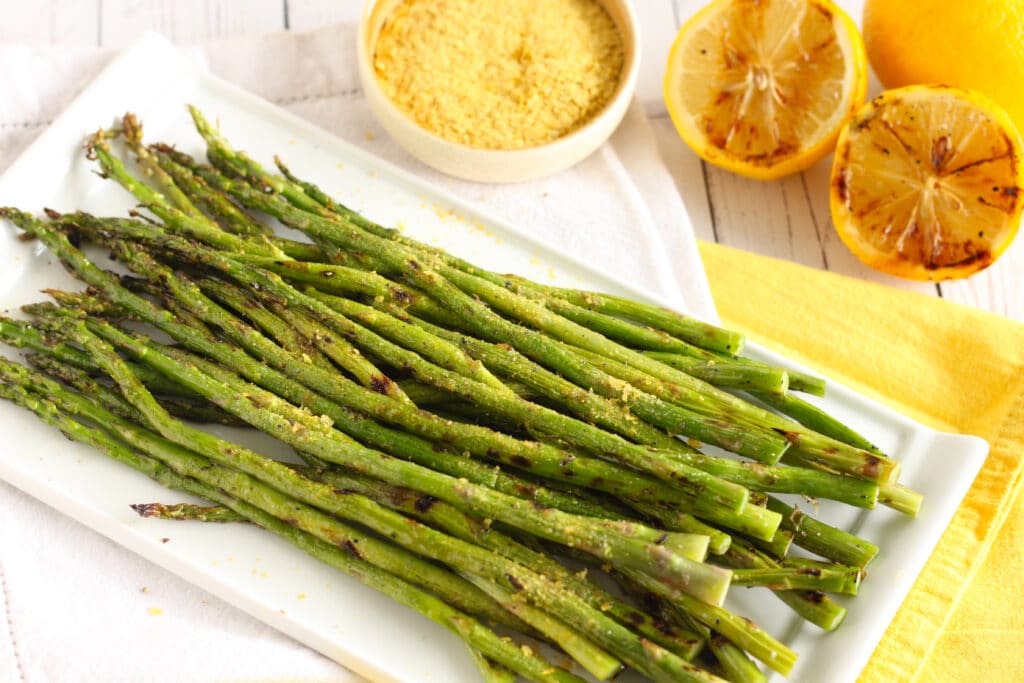
This is one of those recipes I come back to again and again during grilling season because it’s so effortless. You don’t need a long ingredient list, complicated prep, or any special skills, just a handful of real food ingredients that shine on their own. Whether you’re serving it as a side dish for dinner, adding it to a summer BBQ spread, or meal prepping for the week, it fits in easily.
At its core, this dish celebrates simplicity.
Fresh asparagus, a little avocado oil, sea salt, black pepper, and grilled lemon come together to create something way more delicious than you’d expect from something so minimal.

Grilled Asparagus Recipe
Gluten-Free & Vegan
Prep time: 5 minutes | Cook time: 10 minutes | Serves: 4 sides
Ingredients
- 1 bunch fresh asparagus, woody ends trimmed
- 1–2 tbsp avocado oil
- ½ tsp sea salt (plus more to taste)
- ¼ tsp freshly ground black pepper (plus more to taste)
- 1 lemon, halved
- 2–3 tbsp nutritional yeast
Directions
- Heat your grill to medium-high.
- Place asparagus on a tray or plate. Drizzle with avocado oil and season with salt and pepper. Toss to coat evenly.
- Place asparagus on the grill (perpendicular to the grates so they don’t fall through) and grill for 6–8 minutes, turning occasionally, until tender with nice grill marks.
- Place the lemon halves, cut-side down, on the grill and grill for 3–4 minutes, until caramelized and slightly softened.
- Transfer the grilled asparagus to a serving platter, sprinkle with nutritional yeast, plus an extra pinch of salt and pepper if desired. Squeeze grilled lemon juice over top just before serving.
Health Benefits of Asparagus (and Why It Deserves a Spot on Your Plate)
Asparagus is one of those underrated vegetables that delivers a lot of nutritional value. It’s light, hydrating, and packed with compounds that support overall wellness.
One of its biggest strengths is its fibre content, which helps support digestion and gut health. Fibre also helps keep you fuller for longer, making asparagus a great addition to balanced meals.
It’s also a natural source of folate, which supports energy production and healthy cell function. On top of that, asparagus contains antioxidants that help protect the body from oxidative stress.
Another interesting benefit is its natural prebiotic content, which helps feed beneficial gut bacteria. A healthy gut microbiome is linked to everything from better digestion to improved immune function.
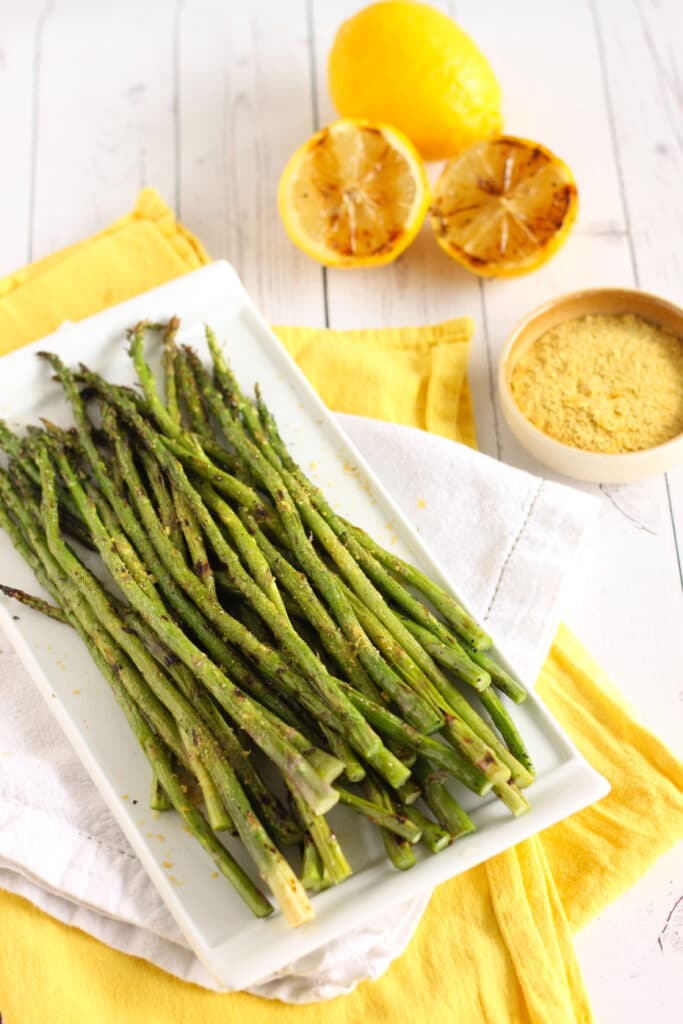
Seasonal Eating: Why Asparagus Shines in Spring and Early Summer
Asparagus is one of the first vegetables to show up in spring, which is why it often feels like a reset food after winter. Eating seasonally isn’t just about freshness; it also aligns with peak nutrient density and better flavour.
During peak season, asparagus is more tender, less woody, and naturally sweeter. That’s why it works so well in simple dishes like Grilled Asparagus Lemon, where you don’t need heavy sauces or complicated seasoning.
Pairing seasonal vegetables with bright ingredients like lemon helps keep meals feeling light and energizing, especially as the weather warms up.
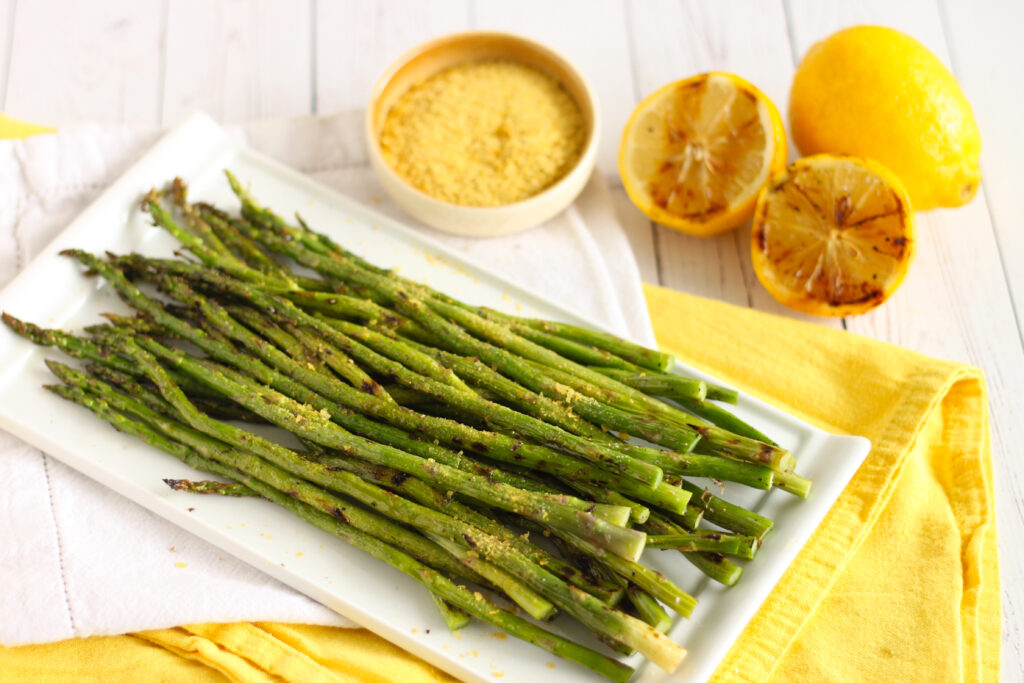
Health Benefits of Lemon (Vitamin C, Immune Support & Seasonal Allergies)
Lemon is doing a lot more behind the scenes than just adding flavour. It’s one of those ingredients that brings both culinary brightness and nutritional value to the table.
Lemons are especially well known for their vitamin C content, which plays an important role in immune support. Vitamin C is a powerful antioxidant that helps protect cells from oxidative stress and supports overall immune function during times when the body needs a little extra support.
Vitamin C also has natural antihistamine-like properties, which is why it’s often highlighted during allergy season. Eating foods high in vitamin C has been shown to help reduce symptoms of allergic rhinitis, which is the irritation of the upper respiratory tract caused by pollen from blooming plants. During allergy season, adding more high-vitamin C foods like citrus fruits can be a simple way to support the body’s natural response.
While vitamin C is widely known for immune support, it also plays a role in helping the body manage inflammation. Since inflammation is a key factor that can contribute to seasonal allergy symptoms, supporting the body with antioxidant-rich foods can be helpful during peak allergy seasons.
When paired with fresh, seasonal vegetables like in this grilled asparagus recipe, it becomes a simple, food-first way to support overall wellness while still keeping meals fresh and enjoyable.
Tips for the Best Grilled Asparagus Every Time
A few small adjustments can make a big difference in this recipe.
First, try to choose thicker asparagus spears. They hold up better on the grill and are less likely to overcook or fall through the grates.
Second, don’t skip the avocado oil. It helps prevent sticking and allows the asparagus to char evenly without drying out.
If your grill grates are wide, use a grill basket. This makes it much easier to cook the asparagus evenly without losing any pieces through the grates.
Third, grilling the lemon is a game-changer. It softens the acidity and brings out a deeper, slightly caramelized citrus flavour that tastes incredible when squeezed over the finished dish. This step is what really defines this grilled asparagus as more than just a basic side.
Not grilling season? You can easily make this recipe in the oven. Preheat the oven to 425°F and line a baking sheet with parchment paper. Roast just the asparagus for 12–15 minutes, depending on thickness, until tender with lightly crispy edges.
Lastly, nutritional yeast adds a subtle cheesy, savoury finish without dairy, making the dish feel more complete and satisfying.
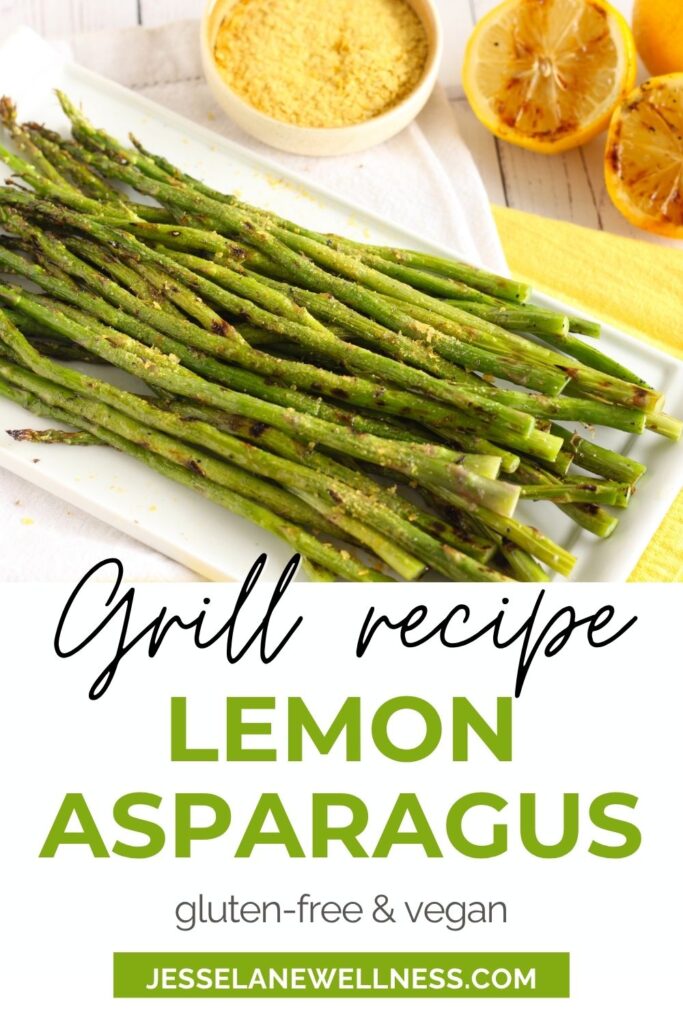
How to Serve Grilled Asparagus
This recipe is versatile enough to pair with almost anything. It works beautifully alongside grilled proteins like salmon or chicken, but it’s also strong enough to stand on its own as part of a vegetarian spread.
Try it with:
- Grilled fish or seafood
- Quinoa or grain bowls
- Mediterranean-style salads
- BBQ spreads in summer
- Light pasta dishes
You can also chop leftovers and toss them into salads or wraps the next day.
Other Healthy Grilling Recipes
If you love this Grilled Asparagus recipe, here are a few other simple, nourishing grilling ideas you might enjoy.
Vegan Grilled Mexican Street Corn
This recipe is all about bold, smoky flavour with a creamy, plant-based twist. It’s a fun summer side dish that works perfectly for BBQs, gatherings, or whenever you want something a little more indulgent but still made with whole food ingredients.

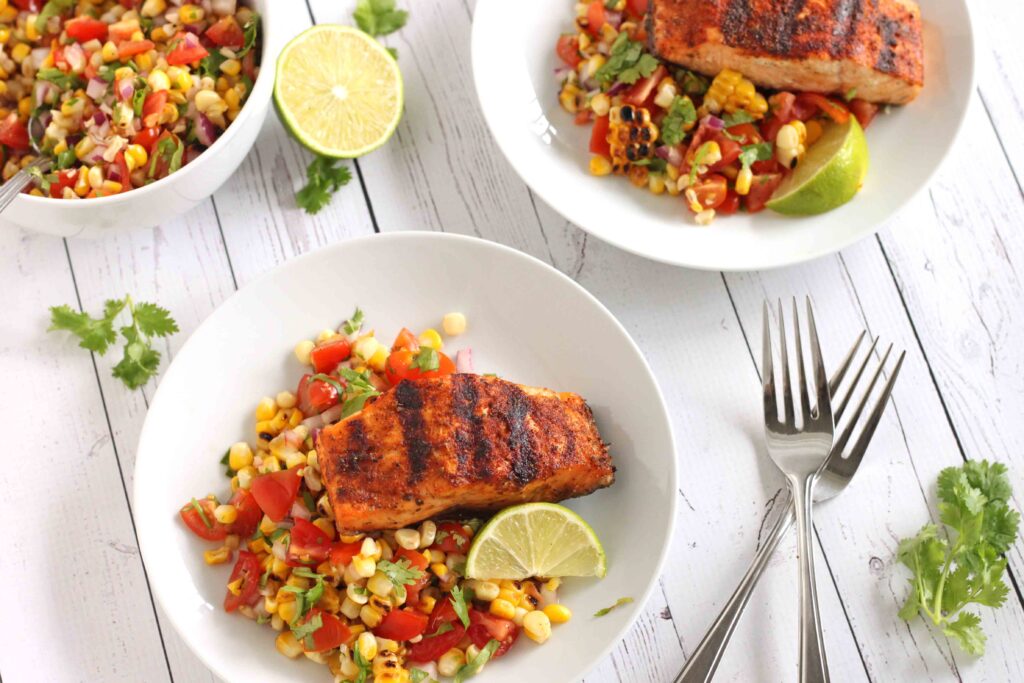
BBQ Salmon with Grilled Corn Salsa
If you’re looking for a balanced, protein-rich meal, this is a great option. The BBQ salmon is paired with a fresh grilled corn salsa that adds sweetness, texture, and brightness to every bite, making it both nourishing and flavourful.
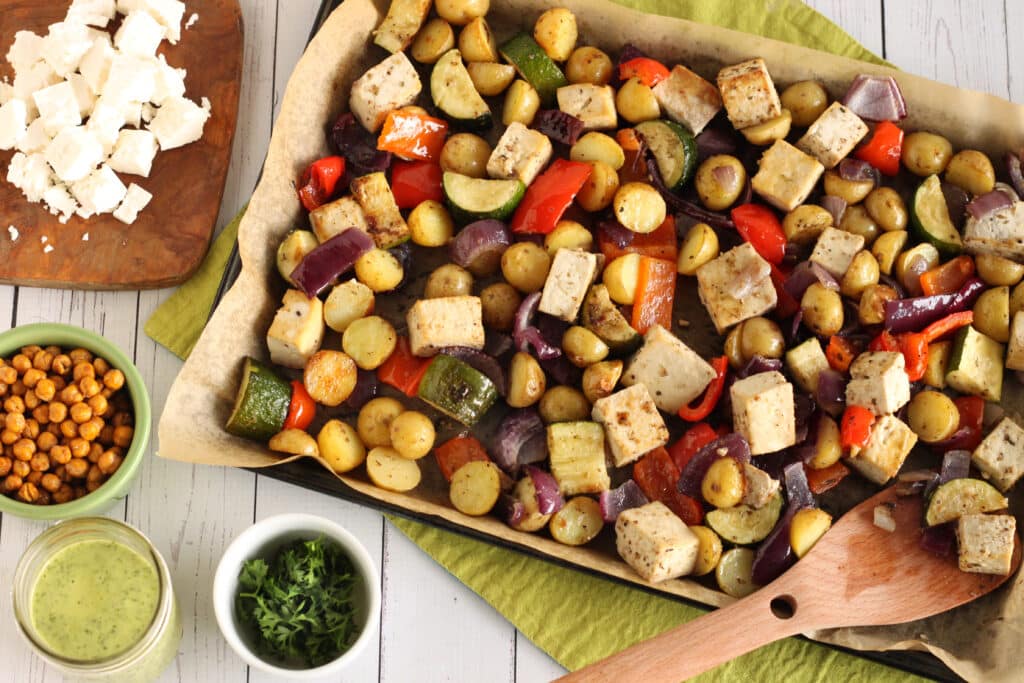
Vegetarian Mediterranean Sheet Pan Dinner
If you’re looking for something easy, colourful, and full of Mediterranean flavour, this is a great go-to. Everything comes together with minimal prep and cleanup, making it perfect for busy weeknights when you still want something nourishing and satisfying. You can also easily adapt this one for the BBQ, which makes it a great option for warmer days when you want to keep cooking outdoors.
Final Thoughts
At the end of the day, recipes like this remind us that good food doesn’t need to be complicated. A few quality ingredients, a hot grill, and a squeeze of citrus are often all you need.
This Grilled Asparagus dish is one of those reliable recipes you can come back to all season long. It’s quick enough for a weeknight, pretty enough for guests, and nourishing enough to make you feel good after eating it.
Simple, fresh, and full of flavour, that’s really the whole idea.